Blog
AI and the Human Touch: Why Teachers Matter More Than Ever
21 October 2025 · By Cathal Leonard · 6 min read
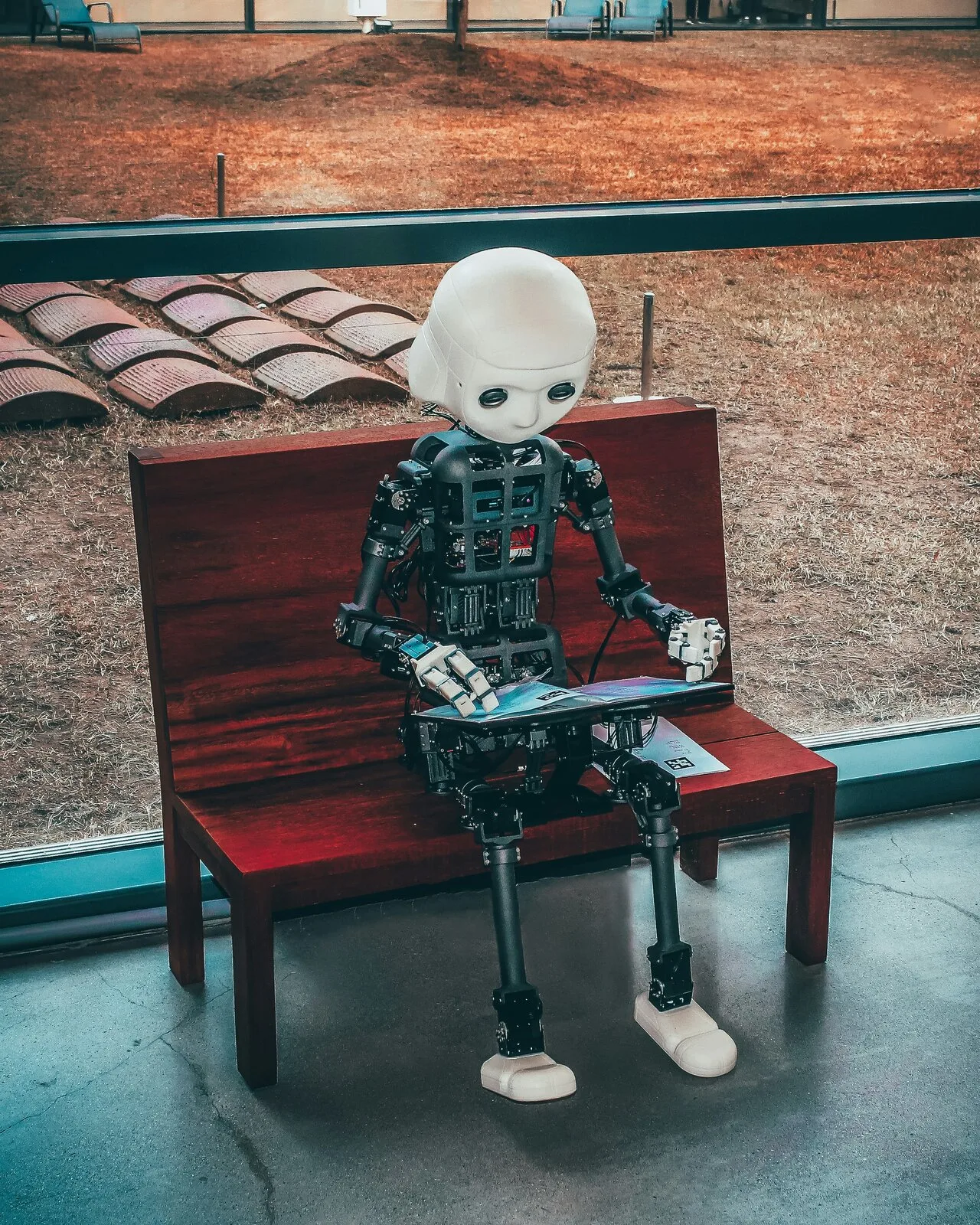
The rise of AI in language learning
Artificial intelligence is transforming how we learn and communicate – from grammar-checking tools to chatbots that can simulate conversations. With AI-powered systems offering 24/7 access to personalised feedback, many are asking: what does this mean for the future of teaching English?
Recent research offers a clear answer. Technology can support English learners – but it cannot replace the vital role of the teacher. In fact, as AI advances, human educators are more important than ever.
What research tells us
A British Council study (2024) found that automated systems often misjudge writing by non-native speakers, flagging it as "AI-generated" simply because of vocabulary or syntax patterns. In other words, these systems are trained to recognise native-like English, not authentic learner English.
Cambridge University Press & Assessment (2023) stresses that "AI can support assessment but cannot yet evaluate communicative competence, interaction, or cultural appropriateness."
Likewise, the OECD's Education and Skills Directorate (2023) reminds us that effective learning depends on "motivation, social interaction, and feedback – elements that remain uniquely human."
Why AI can assist – but not replace – teachers
AI tools are brilliant for generating examples, practising vocabulary, or providing instant grammar feedback. They can help learners build confidence in private, especially those hesitant to speak in class.
But AI cannot sense a learner's hesitation, interpret tone, or adjust to the subtle shifts in communication that make real interaction meaningful. It can't create the psychological safety students need to take risks and make mistakes – the very process through which true learning happens.
As the British Council's Future of English report notes, language is about more than accuracy – it's about connection, empathy, and understanding cultural nuance.
Human teachers bring those elements to life. They provide adaptive guidance, emotional intelligence, and fair judgment. They help learners collaborate, build creativity, and navigate the unpredictable flow of real conversation – something no algorithm has yet mastered.
Research by TESOL International (2022) reinforces this, highlighting that "teacher-student interaction remains the strongest predictor of sustained language proficiency." Language learning, it turns out, is not only intellectual; it's emotional, social, and deeply personal.
The case for human-centred AI in education
The British Council's Human-Centred AI: Lessons for English Learning and Assessment paper calls for keeping educators at the heart of innovation. It identifies ten principles – among them "Educators are essential" and "Be inclusive and embrace diversity."
Used thoughtfully, AI can help teachers focus on what they do best: building relationships, creating dynamic lessons, and guiding learners through the rich complexity of English as it's actually used.
This approach ensures fairness and equity, particularly when AI detection tools risk disadvantaging second-language speakers. As the report emphasises, AI must support, not substitute, human expertise.
At Immersion English, learning is human by design
At Immersion English, our Dublin Summer School combines the best of both worlds: dynamic, communicative classes supported by smart tools – and led by qualified, experienced teachers.
Students learn English by living it: through conversation, teamwork, music, theatre, and cultural exploration across Dublin. They engage with technology as a supportive partner, but their growth comes from real human interaction – with teachers who guide, challenge, and inspire them.
Technology can make learning faster. People make it meaningful.
At Immersion English, we believe language learning should build not just skills, but confidence, empathy and connection. Because English, as with any language, must be lived to be learned.
Further reading
Human-led learning
Experience teaching that technology can't replace
CELTA-qualified teachers, small groups, and speaking-focused lessons in Sofia and Dublin.
Meet the team